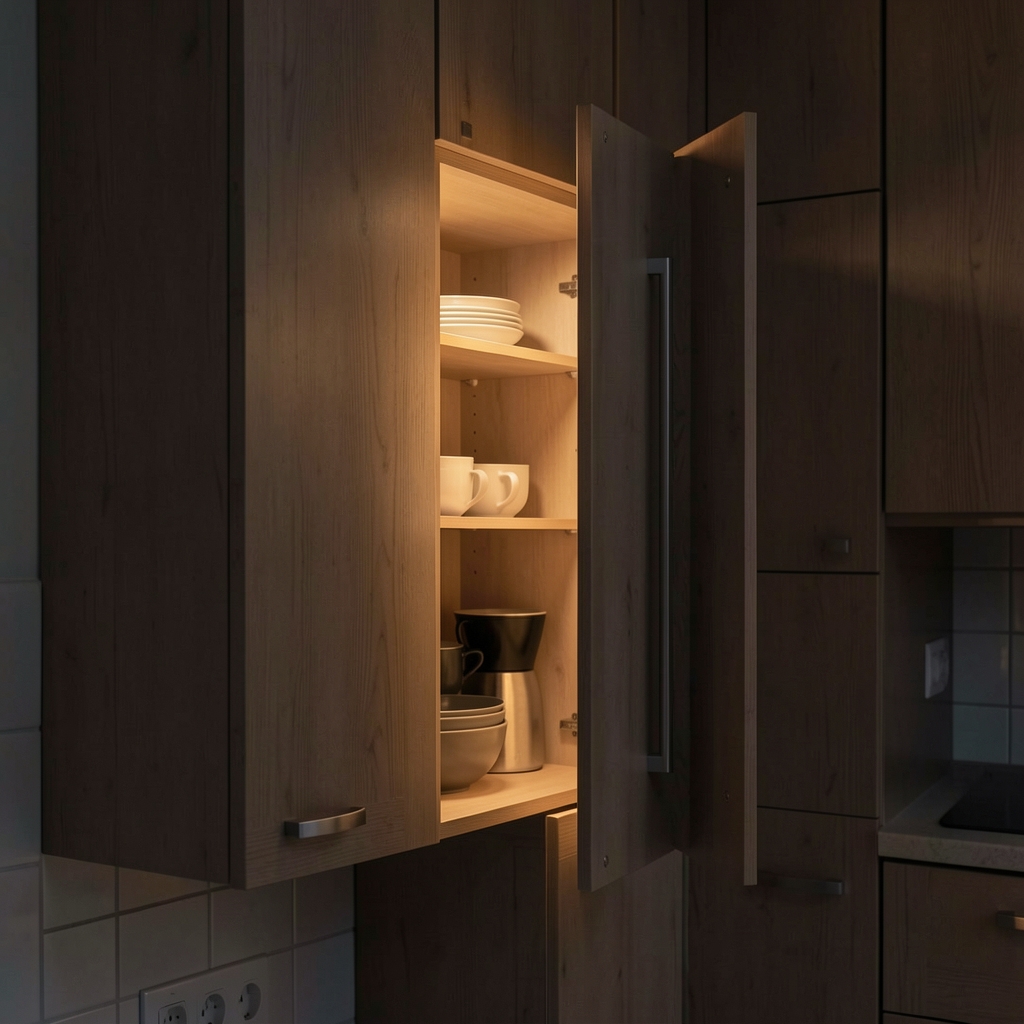
Late in the evening, when the day's purposes have dissolved, a different kind of appetite tends to surface. The kitchen becomes a destination. The cupboard is opened not because a meal is being prepared but because something — not yet named, not quite hunger — has arrived and the kitchen is where that something goes. Night-time eating, and the pattern of stress and food that underlies it, is one of the more persistent and least-examined features of daily life. This article examines what drives it, and what noticing it might make possible.
Why evening is different
The evening hours have a different relationship to eating than the rest of the day. During the working day, eating tends to be structured by external rhythms — breakfast before departure, lunch at a particular time, dinner at an hour shaped by the household's schedule. These structures are constraining, but they also provide a kind of scaffolding. They make the question of when to eat answerable without deliberation.
After dinner, that scaffolding is gone. The evening unfolds without eating-specific landmarks. There is no obvious moment at which a snack is appropriate, and no obvious moment at which it is not. Into this structural vacuum, a variety of eating triggers can move freely: the winding-down of the day's tension, the transition from activity to rest, the encounter with a screen and the associations it carries, the quiet arrival of feelings that the day's activity had kept at a distance.
This is the ecology in which night-time eating takes hold. It is not that people suddenly become more hungry after ten in the evening — in most cases, they do not, and the evidence from studies of habitual snacking suggests that late evening food intake tends to occur when people are not physiologically hungry by any reasonable measure. What has changed is the availability of attention and the presence of mood, and the absence of the structures that would otherwise give mood somewhere else to go.
The vocabulary of late-night appetite
Comfort food habits, as a category, are especially prominent in the late hours. There is something particular about the evening that gives comfort food its weight — the sense of reward at the end of a long day, the permission that comes with being off-duty, the association between certain foods and the kind of ease that a difficult afternoon did not provide. This is not irrational. The connection between food and a feeling of being looked after runs very deep for most people, and the evening is when that connection tends to become active.
The overlap between boredom eating and stress and food is particularly pronounced at this time of day. A person who has spent the evening trying to wind down from a demanding day may find themselves moving between a form of restless boredom — nothing quite satisfying, nothing quite absorbing — and a more active anxiety that has not yet fully resolved. Both of these states push towards food. The food offers texture, occupation for the hands and mouth, a brief reduction in the sense of unease.
"The evening hunger that arrives without appetite is often a message about the shape of the day — about what accumulated over the course of it, and where it has been left to settle."
Eleanor Whitfield, JAKOBSEN BU-HU PIERCING
Distracted eating and the screen's role
One of the most consistent features of late-night eating is its association with distracted eating. The screen — television, laptop, phone — creates a particular set of conditions for eating. It occupies visual and auditory attention, leaving the eating to proceed without the quality of awareness that would otherwise accompany it. This is not a recent development; the connection between screen time and evening snacking is one of the most reliably observed patterns in the broader literature on habitual snacking.
What makes distracted eating especially relevant in the evening context is its interaction with recognising fullness cues. The body does communicate satiety — there is a point at which the stomach sends upward signals that eating has been sufficient. But these signals require a degree of attentiveness to receive. When attention is fully occupied by a screen, the signals tend to be noticed later, or not at all until they have become discomfort. The result is eating pace and fullness arriving out of sequence: the eating ends not because satisfaction has been reached but because the packet or the bowl is empty.
This is distinct from mindful portion awareness, which requires neither formal practice nor significant effort, but simply the maintenance of some attention to the eating itself while it is happening. This is harder in practice than it sounds, partly because the screen has been deliberately designed to occupy attention fully, and partly because the very appeal of evening screen time is often the relief from the self-monitoring that the day required. Asking someone to be attentive to their eating while they are specifically seeking inattention is a genuine tension, and one that is worth acknowledging rather than dismissing.
- Evening eating tends to occur in the absence of the day's structural scaffolding — when external prompts for meal timing have dissolved and internal states have more freedom to move.
- Distracted eating and screen time are closely associated with night-time eating, partly because both reduce the quality of attention available for recognising fullness cues.
- Weekend eating patterns often differ from weekday patterns in ways that amplify night-time eating — the later bedtime, the looser structure, the longer evening unattended.
- The eating environment matters: the same food consumed at a table, with attention, tends to produce a different quality of experience than food consumed on a sofa while watching a screen.
Weekend eating patterns and their particular rhythm
Weekend eating patterns deserve particular attention in the context of night-time eating, because weekends tend to amplify the conditions that make it more likely. The later bedtime extends the evening. The absence of a work schedule loosens the structure of the day. The transition from the week's accumulated pressure can produce, in the early weekend evening, both a heightened sense of relief and a more diffuse restlessness that does not have an obvious outlet.
For people who notice a significant divergence between their weekday and weekend eating — in terms of timing, quantity, and the emotional quality of the eating — the weekend pattern is often more revealing of the underlying dynamics. The weekday structure suppresses certain patterns; the weekend reveals them. What a person finds themselves reaching for at eleven on a Saturday night, in what mood, and following what kind of day, is a more direct record of the food and mood connection than the structured lunch eaten at a desk on a Tuesday.
The eating environment as a practical variable
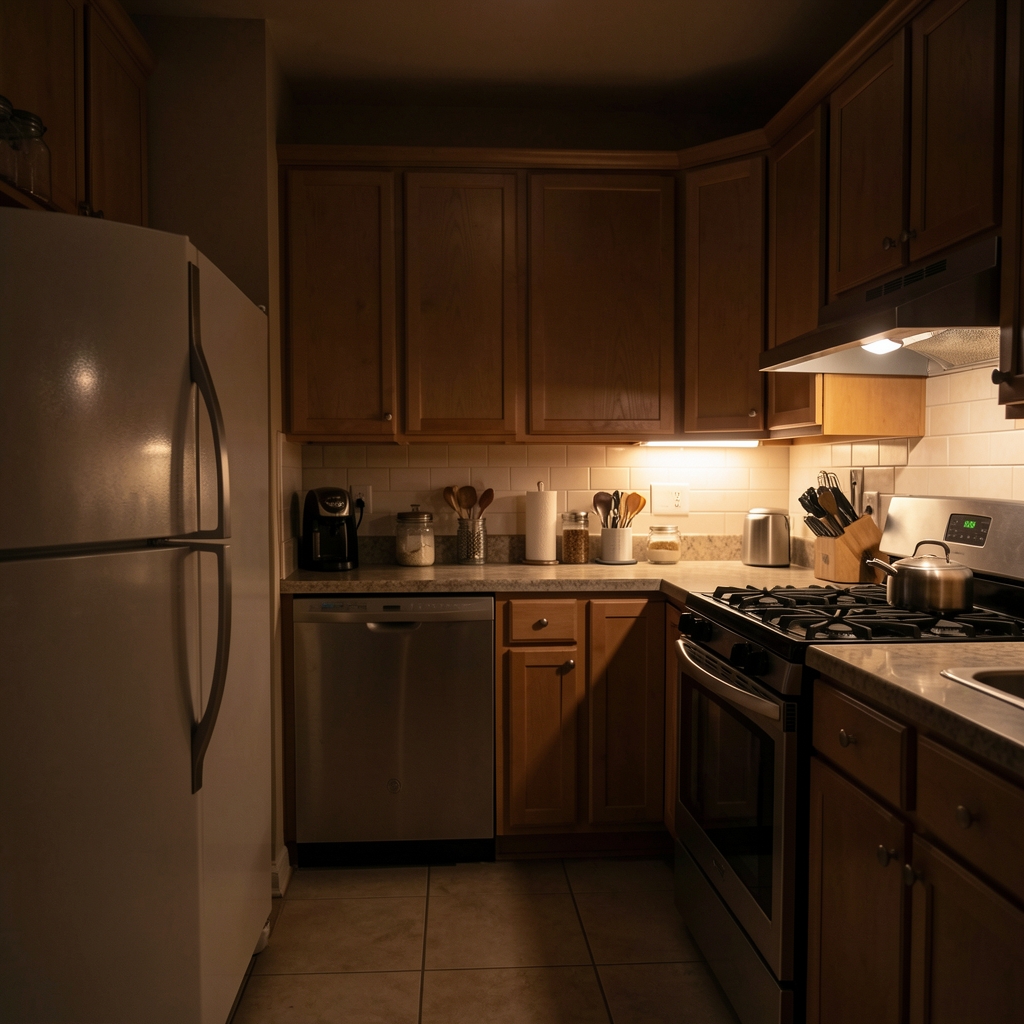
One of the more practically accessible points of intervention in night-time eating patterns is the eating environment. Not the food itself — which tends to be the focus of most attention — but the physical and sensory conditions in which eating occurs. The question of whether one eats a late snack at a table, with the lights on, away from a screen, is not a small one. It tends to change the quality of attention brought to the eating, and with it the experience of satiety and the likelihood of eating beyond fullness.
Slowing down at mealtimes — or at snack times, which applies equally here — does not require any particular setup. It requires simply eating more slowly than the default pace, which for most people in the evening is quite fast. The evidence on eating pace and fullness is consistent: the body's satiety signals operate on a delay, and pace affects whether those signals arrive during eating or after it. Slowing down creates the window in which recognising fullness cues becomes possible before the eating has already ended.
None of this requires willpower in any meaningful sense. It requires the modest act of setting up the eating environment with some care, and the modest intention of eating with some attention. Both of these are within reach most of the time — and when they are not, that too is information worth noticing.
On self-compassion and the persistent pattern
Night-time eating is one of those patterns that many people have noticed in themselves, have tried to interrupt, and have found surprisingly persistent. This is worth acknowledging without apology. The combination of fatigue, reduced self-regulatory capacity, and the particular emotional weight of the late evening makes this one of the more challenging contexts for changing habitual behaviour.
Articles published on JAKOBSEN BU-HU PIERCING are editorial in nature and reflect the writers' observations on everyday wellness practices. The content is not intended as guidance for the management of any specific condition. Readers with specific concerns about their daily routines are encouraged to speak with a qualified wellness professional. What this journal can offer is a frame for noticing — not for judging, and not for fixing, but for understanding a little more clearly what is actually happening in the hours when the day has ended and the cupboard is open.